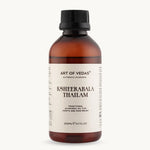
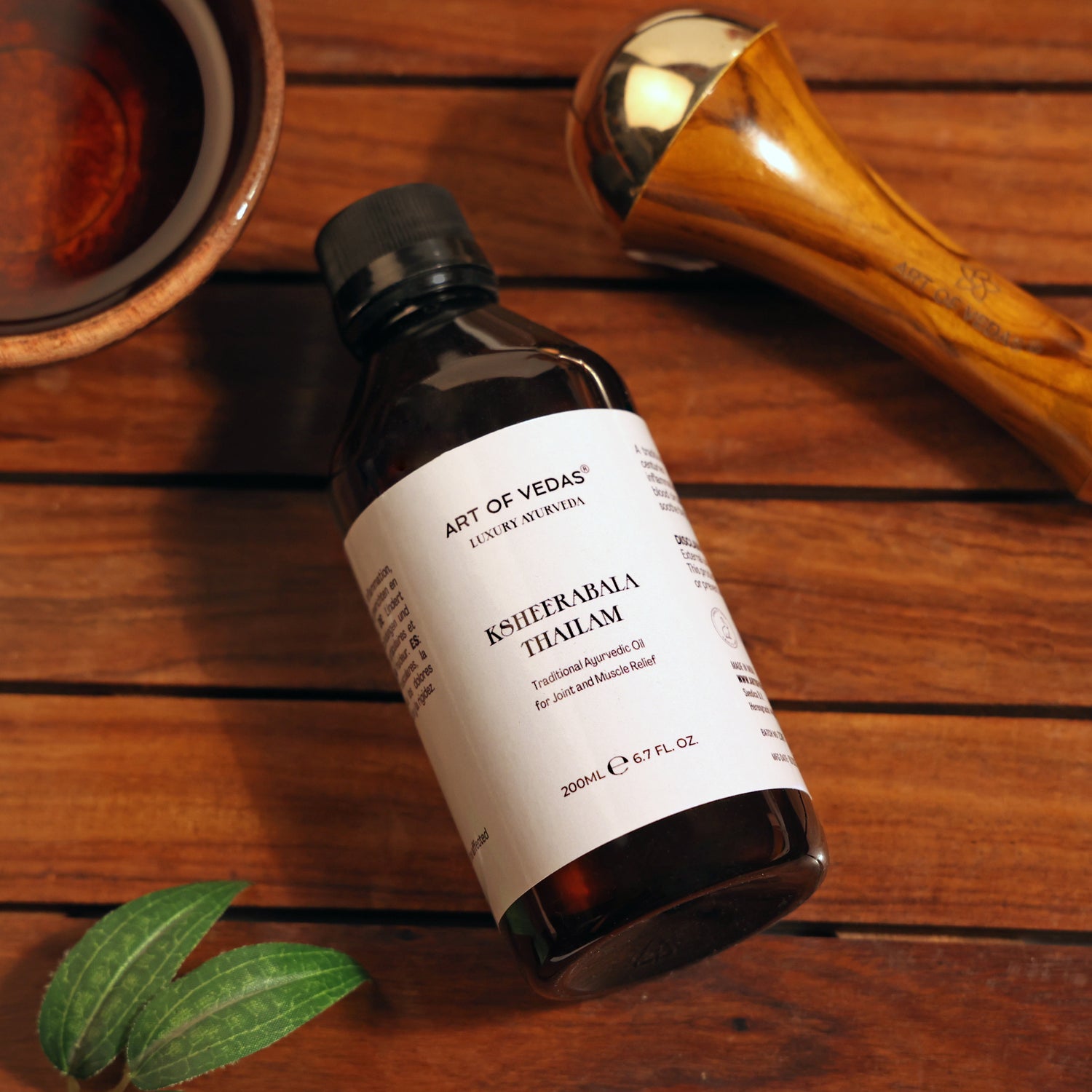
Ksheerabala Thailam

(2)

Classical Ayurvedic Nerve Oil

86,00 zł

430,00 zł l

Ksheerabala Thailam is a classical Ayurvedic formulation documented in Ashtanga Hridayam and Sahasrayogam. This elegant three-ingredient oil, Bala (Sida cordifolia), cow's milk, and sesame oil is traditionally regarded as a nerve tonic in Ayurveda. Prepared using the Ksheerapaka method (milk processing), Ksheerabala offers a cooling, calming quality that distinguishes it from warming oils like Mahanarayana. Particularly valued for Padabhyanga (foot massage) as part of an evening relaxation ritual.

Net Content

INGREDIENTS

Sesamum Indicum (Sesame) Seed Oil, Sida Cordifolia (Bala) Root Extract, Cow's Milk (Ksheera)

86,00 zł

430,00 zł l
Ayurvedic thailam - Ksheerabala Thailam - Ayurvedic Massage Oil - ayurvedic wellness by Art of Vedas

Ksheerabala Thailam Benefits

Ksheerabala Thailam holds a distinguished place in Ayurvedic tradition as the classical nerve tonic oil. Its name reveals its essence: Ksheera (milk) and Bala (Sida cordifolia, meaning "strength") combined in Thailam (oil). This simple yet powerful combination has been valued for over a thousand years for its calming, nourishing effects on the nervous system.

The formulation is documented in Ashtanga Hridayam, composed by the great physician Vagbhata, and in Sahasrayogam, the comprehensive Kerala formulary of over 1,000 classical preparations. Classical scholars attribute its discovery to Kerala's tradition of oil therapy, where practitioners observed that cooking Bala root in milk before processing in sesame oil enhanced both its potency and gentleness.

What distinguishes Ksheerabala from other classical Thailams is its Sheeta Virya — a cooling thermal quality. While Mahanarayana Thailam is warming and best suited for cold seasons and athletic recovery, Ksheerabala offers a gentle, cooling action that calms both Vata and Pitta doshas. This makes it particularly suitable for those with sensitive constitutions, during warmer months, or when seeking relaxation rather than invigoration.

In Ayurvedic pharmacology, Ksheerabala is classified as both Balya (strengthening) and Medhya (supporting mental clarity). The Bala herb nourishes Majja Dhatu — the tissue layer associated with the nervous system and bone marrow — while the milk processing (Ksheerapaka) softens and enhances the oil's penetrating quality.

Traditionally suited for:

  • Padabhyanga — foot massage before sleep as part of evening ritual
  • Shirodhara — the classical forehead oil flow therapy
  • Abhyanga — full-body massage for Vata constitution
  • Scalp massage to calm an overactive mind
  • Professional Panchakarma therapies
  • Daily self-care for those experiencing stress or restlessness

How to use Ksheerabala Thailam

For Padabhyanga (Evening Foot Massage):

This is perhaps the most beloved application of Ksheerabala Thailam — a simple ritual before sleep that has been practiced in Indian households for generations.

  1. Warm a small amount of oil by placing the bottle in warm water for a few minutes
  2. Sit comfortably and apply oil to both feet
  3. Massage each foot for 5–10 minutes using circular motions around the ankles and heels
  4. Press gently along the sole of the foot, paying attention to the arch
  5. Massage between each toe
  6. Wear light cotton socks afterward to protect bedding
  7. Allow the calming ritual to prepare you for restful sleep

For Abhyanga (Full-Body Massage):

  1. Warm the oil to a comfortable temperature
  2. Begin at the scalp, applying oil to the crown of the head
  3. Move to the face, ears, and neck with gentle circular strokes
  4. Apply to the body using long strokes on limbs, circular motions on joints
  5. Massage the abdomen gently in a clockwise direction
  6. Include the soles of feet — considered vital points in Ayurveda
  7. Allow 20–30 minutes for absorption
  8. Follow with a warm shower or bath

For Shiro Abhyanga (Head Massage):

Apply warm oil to the scalp and massage gently for 10–15 minutes. This practice is traditionally recommended for calming mental restlessness and supporting sound sleep.

Recommended frequency:

For general wellbeing, 2–3 times per week. For those experiencing stress or sleep difficulties, daily foot massage before bed is traditionally recommended. During Vata season (autumn and early winter), more frequent application supports balance.

Important:

  • External use only
  • Warm gently — do not microwave or overheat
  • Take care in shower or bath as oil may make surfaces slippery
  • If pregnant, consult your healthcare provider before beginning any new practice

Classical Ayurveda Reference

Ksheerabala Thailam is documented in the foundational Ayurvedic texts Ashtanga Hridayam (Vagbhata) and Sahasrayogam, the comprehensive Kerala formulary. The Sushruta Samhita also references preparations using this combination of ingredients.

Sanskrit: क्षीरबला तैलम् (Kṣīrabalā Tailam)

The name derives from: Kṣīra (क्षीर) meaning milk, Bala (बला) meaning strength (referring to Sida cordifolia), and Tailam (तैलम्) meaning oil.

This formulation is classified in Ayurvedic pharmacology as follows:

Rasa (Taste): Madhura (sweet)

Guna (Quality): Snigdha (unctuous), Guru (heavy), Mridu (soft)

Virya (Potency): Sheeta (cooling)

Vipaka (Post-digestive effect): Madhura (sweet)

Dosha: Pacifies Vata primarily; also balances Pitta. May increase Kapha in excess.

Karma (Actions): Balya (strengthening), Brimhana (nourishing), Vatahara (Vata-pacifying), Medhya (supporting mental clarity)

Dhatu Affinity: Majja (nervous tissue), Asthi (bone tissue), Mamsa (muscle tissue)

Classical texts specifically indicate Ksheerabala Thailam for Vatavyadhi (Vata disorders), as a nervine tonic, and for Panchakarma therapies including Abhyanga, Shirodhara, Pizhichil (oil bath), and Basti karma.

This information is from classical Ayurvedic texts for educational purposes. Consult a qualified Ayurvedic practitioner or healthcare provider for personalized guidance.


Frequently Asked Questions About Ksheerabala Thailam

Ksheerabala Thailam is traditionally used for calming the nervous system and supporting relaxation. Its name — combining Ksheera (milk) and Bala (strength herb) — reflects its nourishing, strengthening qualities. The oil is particularly valued for Padabhyanga (foot massage before sleep), Abhyanga (full-body massage), Shirodhara (forehead oil flow), and scalp massage. In professional Panchakarma settings, it is used in Pizhichil (oil bath) and Basti (enema) therapies. Unlike warming oils like Mahanarayana, Ksheerabala has a cooling quality (Sheeta Virya) that makes it suitable for sensitive constitutions and those seeking gentle, calming support.

In Ayurvedic tradition, Ksheerabala Thailam is classified as both Balya (strengthening) and Medhya (supporting mental clarity). The formulation contains only three ingredients — Bala (Sida cordifolia), cow's milk, and sesame oil — yet this simplicity delivers profound effects. The Ksheerapaka preparation method (milk processing) enhances the oil's penetrating and nourishing qualities. Regular application through massage is traditionally considered supportive of nervous system wellness, relaxation, and restful sleep. The cooling quality also makes it suitable during warmer months or for those with Pitta tendencies.

Yes. Daily oil application (Abhyanga) is described in classical Ayurvedic texts as an essential component of Dinacharya — the recommended daily routine. Ksheerabala Thailam is particularly suited for daily foot massage before sleep (Padabhyanga). This simple evening ritual takes just 5–10 minutes and has been practised in Indian households for generations. For full-body Abhyanga, 2–3 times per week is traditional practice. During Vata season (autumn and early winter) or periods of stress, more frequent application supports balance.

Store in a cool, dry place away from direct sunlight. The oil has a shelf life of approximately 3 years from manufacture when stored correctly. Due to its traditional preparation without modern emulsifiers, the oil may thicken slightly in cold temperatures — this is normal and does not affect quality. Warm gently in a water bath before use. Keep the bottle tightly closed after each use.

Ksheerabala Thailam primarily pacifies Vata dosha while also balancing Pitta. Its cooling quality (Sheeta Virya) distinguishes it from warming oils like Mahanarayana Thailam, which is better suited for Kapha conditions. The oil's Snigdha (unctuous) and Guru (heavy) qualities counter the dry, light nature of Vata. However, those with significant Kapha imbalance should use it moderately, as its heavy quality may increase Kapha if overused. For Vata-Pitta types or those experiencing stress, mental restlessness, or sleep difficulties, Ksheerabala is particularly well-suited.

Ksheerabala Thailam is generally considered gentle and is traditionally used in some contexts during pregnancy. However, every pregnancy is unique, and Ayurvedic recommendations vary based on individual constitution and stage of pregnancy. Dhanwantharam Thailam is more specifically indicated for pregnancy care in classical texts. We recommend consulting with your healthcare provider or a qualified Ayurvedic practitioner before beginning any new practice during pregnancy. For postnatal care, Ksheerabala can be considered as part of recovery support, particularly for calming and relaxation.